
Recently, the government announced yet another ambitious scheme aimed at providing health insurance to 50 crore individuals.
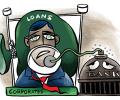
Public sector banks (PSBs) have written off a massive Rs 8 trillion of loans in the seven years of the Narendra Modi government in office. This is more than twice the capital infused by the Bharatiya Janata Party-led government during the period. Between 2014-15 and 2020-21 (FY21), the Centre had infused Rs 3.37 trillion into PSBs. At Rs 1.06 trillion, FY19 saw the highest capital infusion.

A leading exporter said, there is enough stock of paracetamol in the country. At present, the US, which has become the epicentre of the COVID-19 outbreak, needs paracetamol. He further said India would lose its credibility as the "pharmacy of the world" if it adopts protectionist policies during such a crisis.
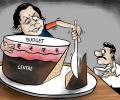
Niti Aayog will prepare the next list of central public sector companies for disinvestment in the next few weeks, its vice chairman Rajiv Kumar said on Thursday and expressed hope that the proposed asset reconstruction and management companies to address banks' bad loan woes will do a good job like the UTI. Days after Finance Minister Nirmala Sitharaman announced the Union Budget for 2021-22 laying out various measures (including disinvestment proposals) to bolster the pandemic-hit economy, Kumar also emphasised that the Modi government has shown consistent commitment for the welfare of farmers and for the improvement of the agriculture sector. "Now the process has begun... We will complete preparation of the next list in the next few weeks, we have got the marching order," Kumar said about the list of public sector companies for the next round of stake sales.

'The people of Uttar Pradesh have already made up their mind to puncture the Samajwadi Party's cycle, kick away the Bahujan Samaj Party's elephant, and remove shadows of the already-vanished hand of the Congress.'

While the likelihood of these states going the Lanka or Greece way may be an alarming assessment, the financial situation of some states such as Punjab and West Bengal is indeed quite weak.

BJP's resurgent performance prompted the state leadership to describe it as a 'saffron strike', while party in-charge Bhupendar Yadav said it has now emerged as the 'only alternative' to the K Chandrasekhar Rao-led regional dispensation with people accepting Prime Minister Narendra Modi's brand of good governance.

'These people jump up and down, excitedly waving their arms about to catch the attention of one political party or the other.' 'This mutant can be very dangerous,' observes T C A Srinivasa-Raghavan.

Changing tracks helps. But, not taking the beaten path isn't always helpful. This is the story of two of India's biggest privatisations - Air India and Bharat Petroleum (BPCL). Nearly two decades after the last privatisation, a landmark divestment concluded this year when the loss-making national carrier Air India was sold to the Tatas.

Economy has become a major cause of concern for the new government with GDP dropping to 5.8 per cent in the last quarter of the 2018-19.

Top gainers in the Sensex pack include SBI, Yes Bank, Tata Motors, L&T, ICICI Bank, IndusInd Bank, ONGC, Maruti, M&M, Axis Bank, RIL, Hero MotoCorp, HDFC, Vedanta, Asian Paints, Tata Steel and Bajaj Finance, rising up to 7 per cent.

The Rs 12,450 crore capital infusion will enable the three public sector general insurance companies to improve their financial and solvency position, meet the insurance needs of the economy, absorb changes and enhance the capacity to raise resources and improve risk management.

Team Modi has been forced to rethink its 'Target Rahul' strategy.
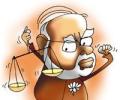
The thought of 'Prime Minister' Modi fills some outgoing ministers with dread.
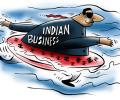
Covering 37 different legislations such as the Partnership Act of 1932, Insolvency and Bankruptcy Code, and laws on environmental protection, consumer protection and labour interests, the recommendations have been shared with Prime Minister Narendra Modi and Finance Minister Nirmala Sitharaman.

If the real estate sector is properly managed, it could drive not just finance but demand for a range of products and services, observes T N Ninan.

The government on Wednesday approved a production-linked incentive (PLI) scheme for the pharmaceutical sector, entailing an outlay of Rs 15,000 crore. The Union Cabinet, chaired by Prime Minister Narendra Modi, approved the scheme which will benefit domestic manufacturers, help create employment and is expected to contribute to the availability of a wider range of affordable medicines for consumers. The duration of the scheme would be from 2020-21 to 2028-29 and is expected to promote the production of high value products in the country and increase the value addition in exports, an official release said.

'The trading community will be a priority for Modi when he forms the next government.'

Bajaj Finance was the top gainer in the Sensex pack, soaring over 8 per cent, followed by Kotak Bank, IndusInd Bank, HDFC, PowerGrid, Axis Bank, ICICI Bank and L&T. On the other hand, Maruti, ITC, NTPC and Nestle India were among the laggards.

The government has given sanction for prosecution against PNB executive director Sanjiv Sharan as part of the clean up exercise in the system.

In a resolution passed at its national assembly in Haridwar, the SJM said the Modi government's proposed strategic divestment of PSEs was an "imprudent business decision" and "against national interest".

None of them who took to the dais at the farmers' morcha spoke about the Forest Rights Act, lack of irrigation facilities, minimum support price, and under-employment among the tribals, issues dear to the agitationists, says Prasanna D Zore.

ICICI Bank was the top laggard in the Sensex pack, cracking over 5 per cent, followed by Kotak Bank, HUL, HDFC, IndusInd Bank, HDFC Bank and Nestle India. On the other hand, Hero MotoCorp, Bajaj Auto, Maruti, TCS and HCL Tech were among the gainers.

'The government in the past has also increased (the limit) from Rs 2.5 lakh to Rs 5 lakh. In future, whenever the time arises, we will look into the matter.'

The Jat vote is crucial in winning at least 40 assembly seats in Western UP, which has been in the grip of a widespread farmer movement, reports Nitin Kumar.
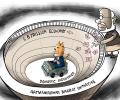
'The first year of the Modi government's second term has laid the roadmap for the future and we will embark on it with gusto,' promises Gopal Krishna Agrawal, the BJP's national spokesperson on economic affairs.

Speculation is rife that the Centre can take draconian steps such as mandatory e-passbooks for all real estate holdings and compulsory checking of every single safe deposit vault.

Overt displays of physical machismo is the stamp of the strongman and it's a symptom that manifests itself in direct proportion to their sense of insecurity, says Kanika Datta.

'The recalculated ranking showed India should have had a higher ranking earlier (113 in 2012 instead of 132) and lower ranking later (114 in 2018 instead of 100).' 'This would mean that there has been no change in India's climate of doing business across two regimes.' 'This is exactly consistent with the reality on the ground,' observes Debashis Basu.

Will the beard continue to be in vogue once WFH wraps up? asks Sandeep Goyal.

Total burden on the exchequer will increase by Rs 12,000 crore to Rs 87,217.50 crore for the year 2019-20.

The government has decided that there has to be a floor minimum wage for the workers.

The recent spate of rate reductions is among the sharpest in one shot since the cuts that followed the 2008 financial crisis

Congress masterstroke foiled by Vajpayee niece's failure. Illustration: Uttam Ghosh/Rediff.com.
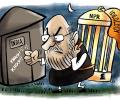
It is going to be a rough and brutal 2020 for India as its government pushes on with its ideological agenda, and the citizens do whatever they can to protect themselves, notes Aakar Patel.

'The BJP may well be his ultimate destination.' 'In the process, he has probably shot himself in the foot.' 'It is unlikely that either Scindia or Pilot will be anything other than a No 3 or a No 4 in the Modi-Shah dispensation,' predicts Amulya Ganguli.

A well-run non-banking company has better margins than a bank, but the objective of setting up Ujjivan was to provide comprehensive financial inclusion, Ujjivan Small Finance Bank MD & CEO Samit Ghosh tells Anup Roy in an interview.

'And so, despite demonetisation, people in business feel safe with Mr Modi,' points out T N Ninan.

Rising oil prices, sharp slowdown in mutual fund inflows and steep valuations remain the key risks for Indian investors going ahead.

In fact, India's investment activity growth is also estimated to touch a 17-year low in FY20. With overall demand not showing signs of revival, investment activity may take longer to recover, economists said.
 © 2026 Rediff.com - Advertise with us - Disclaimer - Privacy Policy - Sitemap - Feedback - About us - Terms of use - Grievances